
Robert Dickerson
Robert Dickerson
(1924-2015)
The late Robert Dickerson is one of Australia’s leading figurative artists. He was one of the Antipodeans (Boyd, Perceval, Dickerson et al), who changed the direction of Australian art in 1959. His ‘Geisha Studies’ are regarded as his best work and are incomparable in Australian art history.
Biography
Robert Dickerson
(1924-2015)
The late Robert Dickerson is one of Australia’s leading figurative artists. He was one of the Antipodeans (Boyd, Perceval, Dickerson et al), who changed the direction of Australian art in 1959. His ‘Geisha Studies’ are regarded as his best work and are incomparable in Australian art history.
After selling his first painting to the National Gallery of Victoria in 1956 Dickerson became established as a major force on the national art scene and his work is instantly recognisable. With a simple brush stroke or pastel line he created intense emotion in the expressions of his subjects, a sophisticated art that engages the viewer in conversation. His art has been described as high-contrast chiaroscuro in a variety of mediums including paint, pastel and charcoals.
Everyday life and the universal themes of loneliness, vulnerability and isolation were Dickerson’s inspiration. He painted "real" subjects of people in the working world. The lonely figure in the empty street, the woman caressing a cat and the oriental beauty poised in a theatrical pose are images from everyday life across cultures. The grim judge, the hopeful jockey, the wistful gaze of the ballerina or the loving stare of the mother with child cradled in her arms. Lone characters with long noses and whimsical, often averted eyes, lovers lost in their own world, solitary figures brood and small groups interact. No two Dickerson's are alike.
There is a mystery or an unfinished tale in every Dickerson work. Long after you've left the image behind the expressions haunt you. What is she/he thinking? The blank planes of the faces he paints offer themselves for interpretation like theatre masks. What lies behind those vivid eyes? Behind every face is a soul and a Dickerson work creates questions and demands answers.
Dickerson's first exhibition was at the Museum of Modem Art, Melbourne in 1956 and was subsequently followed by many solo exhibitions at leading galleries in all
states around Australia. In 1961 he was chosen to exhibit at the Whitechapel in London, his work gaining attention overseas. In 1963, he was selected for the Sao Paolo Biennale in Brazil, and had his work exhibited at the Tate Gallery, London.
In 1991 Robert Dickerson moved from his city studio to country Queensland, leaving behind him Sydney's Paddington where he had painted such classic images of individual and urban isolation as Guy 1957, in the collection of the Newcastle Region Art Gallery, and Wynyard Station1959 in the Ballarat Fine Art Gallery. He settled at Eumundi near Noosa, enjoying the bush and the beach, where he swam every day. Here he returned to painting the peopled landscape, of figures performing farming tasks like picking strawberries at Palmwoods and harvesting sugar cane.
His work has been represented in overseas exhibitions and galleries including the Whitechapel, Tate, Qantas and England & Co Galleries in London, The Australian Painters Mertz Collection Corcoran Gallery Washington D.C. USA, Koepelkirker, Amsterdam and is held in numerous galleries, museums and corporate and private art collections around the world. Serious collectors of Australian art own at least one Dickerson.
Inspired by artists such as Manet, Degas, Picasso, Monet, Daumier and Goya, Dickerson joins the list of artists whose impact on the society of their day ensures that they are written into the art history books for all time.
REPRESENTED
National Gallery of Australia
Mertz Collection USA
Huntington Gallery
University of Texas
Art Gallery of New South Wales
National Gallery of Victoria
Queensland Art Gallery
Art Gallery of South Australia
Art Gallery of Western Australia
Tasmanian Museum and Art Gallery
Museum of Modern Art and Design Melbourne
Australian National University
University of Melbourne
University of Western Australia
State and Regional Galleries
Numerous corporate and private collections In Australia and overseas
SELECTED BIBLIOGRAPHY
Dickerson J, Robert Dickerson Against The Tide Pandanus Press 1995
Gleeson J, Modern Painters 1931-70
Lansdowne Press 1971
Haese R, Rebels and Precursors:
The Revolutionary Years of Australian Art Alien Lane Ringwood 1981
Hughes R, The Art of Australia Penguin Hammondsworth 1970
Luck R K, A guide to Modern Australian Paintings Sun Books Melbourne 1969
Modern Australian Art Museum of Modern Art Melbourne 1958
Smith B, Australian Painting 1799-1970 Oxford University Press 1974
Thomas L, The Most Noble Art of Them All University of Queensland Press 1976
(1924-2015)
The late Robert Dickerson is one of Australia’s leading figurative artists. He was one of the Antipodeans (Boyd, Perceval, Dickerson et al), who changed the direction of Australian art in 1959. His ‘Geisha Studies’ are regarded as his best work and are incomparable in Australian art history.
After selling his first painting to the National Gallery of Victoria in 1956 Dickerson became established as a major force on the national art scene and his work is instantly recognisable. With a simple brush stroke or pastel line he created intense emotion in the expressions of his subjects, a sophisticated art that engages the viewer in conversation. His art has been described as high-contrast chiaroscuro in a variety of mediums including paint, pastel and charcoals.
Everyday life and the universal themes of loneliness, vulnerability and isolation were Dickerson’s inspiration. He painted "real" subjects of people in the working world. The lonely figure in the empty street, the woman caressing a cat and the oriental beauty poised in a theatrical pose are images from everyday life across cultures. The grim judge, the hopeful jockey, the wistful gaze of the ballerina or the loving stare of the mother with child cradled in her arms. Lone characters with long noses and whimsical, often averted eyes, lovers lost in their own world, solitary figures brood and small groups interact. No two Dickerson's are alike.
There is a mystery or an unfinished tale in every Dickerson work. Long after you've left the image behind the expressions haunt you. What is she/he thinking? The blank planes of the faces he paints offer themselves for interpretation like theatre masks. What lies behind those vivid eyes? Behind every face is a soul and a Dickerson work creates questions and demands answers.
Dickerson's first exhibition was at the Museum of Modem Art, Melbourne in 1956 and was subsequently followed by many solo exhibitions at leading galleries in all
states around Australia. In 1961 he was chosen to exhibit at the Whitechapel in London, his work gaining attention overseas. In 1963, he was selected for the Sao Paolo Biennale in Brazil, and had his work exhibited at the Tate Gallery, London.
In 1991 Robert Dickerson moved from his city studio to country Queensland, leaving behind him Sydney's Paddington where he had painted such classic images of individual and urban isolation as Guy 1957, in the collection of the Newcastle Region Art Gallery, and Wynyard Station1959 in the Ballarat Fine Art Gallery. He settled at Eumundi near Noosa, enjoying the bush and the beach, where he swam every day. Here he returned to painting the peopled landscape, of figures performing farming tasks like picking strawberries at Palmwoods and harvesting sugar cane.
His work has been represented in overseas exhibitions and galleries including the Whitechapel, Tate, Qantas and England & Co Galleries in London, The Australian Painters Mertz Collection Corcoran Gallery Washington D.C. USA, Koepelkirker, Amsterdam and is held in numerous galleries, museums and corporate and private art collections around the world. Serious collectors of Australian art own at least one Dickerson.
Inspired by artists such as Manet, Degas, Picasso, Monet, Daumier and Goya, Dickerson joins the list of artists whose impact on the society of their day ensures that they are written into the art history books for all time.
REPRESENTED
National Gallery of Australia
Mertz Collection USA
Huntington Gallery
University of Texas
Art Gallery of New South Wales
National Gallery of Victoria
Queensland Art Gallery
Art Gallery of South Australia
Art Gallery of Western Australia
Tasmanian Museum and Art Gallery
Museum of Modern Art and Design Melbourne
Australian National University
University of Melbourne
University of Western Australia
State and Regional Galleries
Numerous corporate and private collections In Australia and overseas
SELECTED BIBLIOGRAPHY
Dickerson J, Robert Dickerson Against The Tide Pandanus Press 1995
Gleeson J, Modern Painters 1931-70
Lansdowne Press 1971
Haese R, Rebels and Precursors:
The Revolutionary Years of Australian Art Alien Lane Ringwood 1981
Hughes R, The Art of Australia Penguin Hammondsworth 1970
Luck R K, A guide to Modern Australian Paintings Sun Books Melbourne 1969
Modern Australian Art Museum of Modern Art Melbourne 1958
Smith B, Australian Painting 1799-1970 Oxford University Press 1974
Thomas L, The Most Noble Art of Them All University of Queensland Press 1976
Showing all 7 results
-
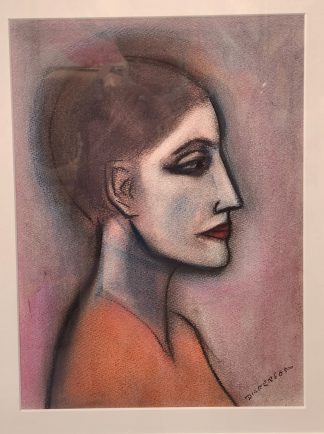
Lady In Red
Robert Dickerson | Pastel & Charcoal | 37x27cm SOLD
Read More -
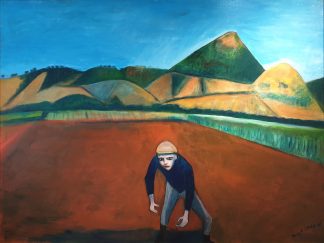
Man in a Landscape
Robert Dickerson | Acrylic on Board | 120x90cm SOLD
Read More -
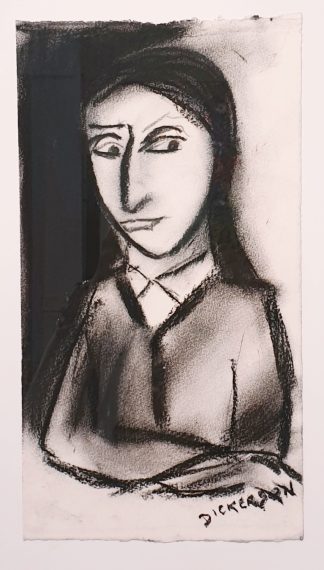
Study Of A Girl
Robert Dickerson | Pastel & Charcoal | 18x32cm SOLD
Read More -
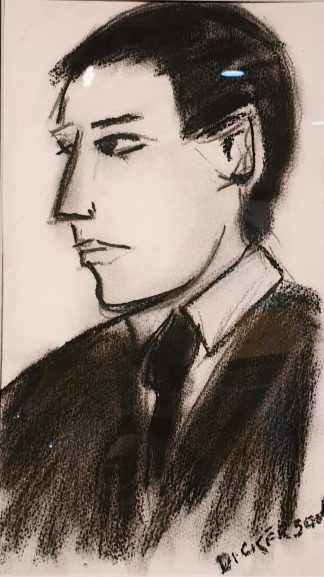
The Business Man
Robert Dickerson | Pastel & Charcoal | 18x32cm SOLD
Read More -
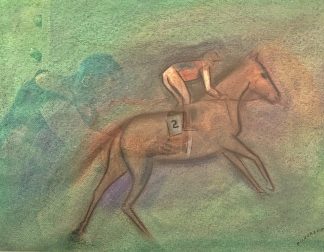
The Favourite
Robert Dickerson | Pastel & Charcoal | 54x74cm SOLD
Read More -
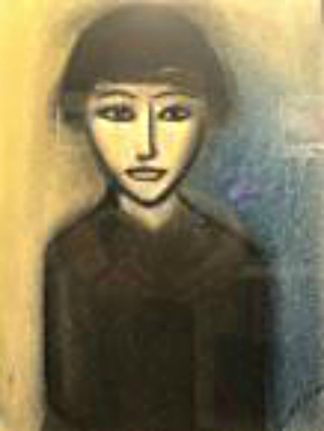
The French Girl
Robert Dickerson | Pastel & Charcoal | 27x37cm SOLD
Read More -
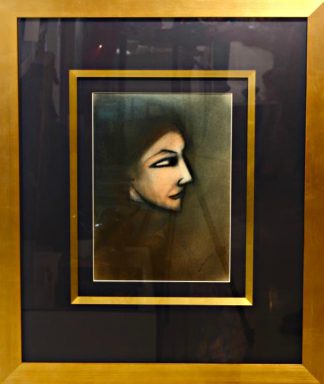
Woman In Profile
Robert Dickerson | Pastel & Charcoal | 28x37cm SOLD
Read More
Showing all 7 results